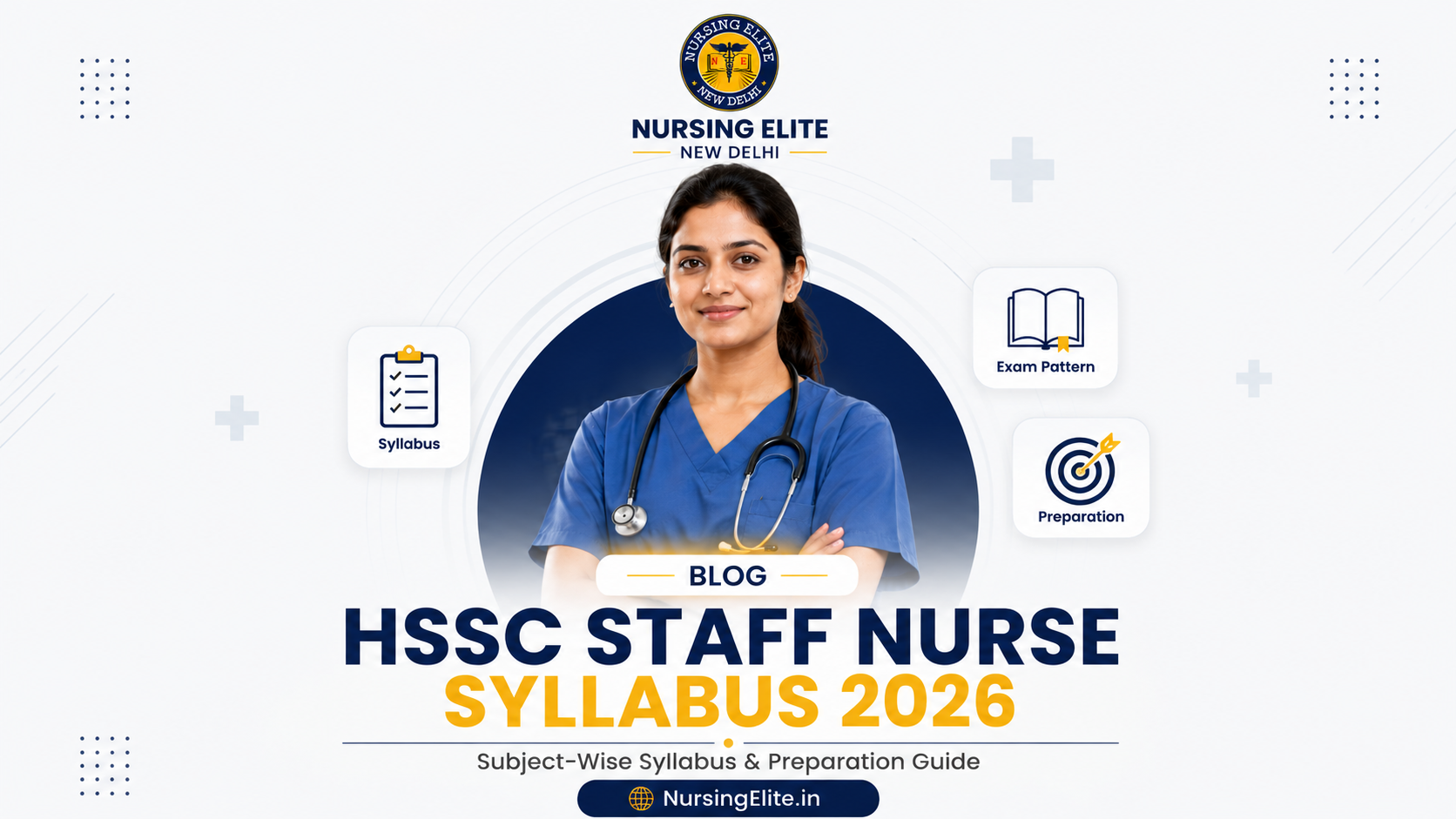
Preparing for the HSSC Staff Nurse Exam 2026? A clear understanding of the syllabus can help for plan your preparation.
HSSC Staff Nurse Syllabus 2026If you are preparing for the HSSC Staff Nurse Exam, understanding the syllabus should be one of your first steps. A clear syllabus helps you identify the subjects you need to cover, divide your preparation time properly, and avoid spending too much time on topics that are less relevant to the examination.
The Haryana Staff Selection Commission (HSSC) lists Staff Nurse under Group-16, with the examination level associated with B.Sc. Nursing / Diploma in G.N.M.
The syllabus broadly covers core nursing subjects along with other sections that may be prescribed for the recruitment examination. However, candidates should always check the latest HSSC notification and official syllabus before finalising their preparation plan because recruitment rules, examination schemes and weightage can change.
In this article, we have explained the major HSSC Staff Nurse Syllabus 2026 topics, subject-wise areas to prepare, and a practical strategy for completing the syllabus effectively.
HSSC Staff Nurse Syllabus 2026: Overview
Before starting preparation, candidates should understand the broad areas covered in the syllabus.
Particular :- Details Exam Conducting Body:- Haryana Staff Selection Commission (HSSC) Post:- Staff Nurse Group:- Group-16 Academic Level Listed by HSSC:- B.Sc. Nursing / Diploma in G.N.M. Major Preparation Area:- Core Nursing Subjects Syllabus Type:- Nursing + other sections as prescribed in the applicable recruitment notification The official HSSC syllabus page currently lists Group-16 Staff Nurse at the B.Sc. Nursing / GNM level.
Important Note About the Exam Pattern
Different recruitment notifications may specify different examination schemes. Some preparation resources currently describe a tentative distribution involving General Awareness & Aptitude, Computer Terminology and subject-related nursing content. Since such weightage is not necessarily a permanent rule for every recruitment cycle, candidates should verify the applicable HSSC notification before relying on a particular percentage distribution.
Subject-Wise HSSC Staff Nurse Syllabus
The core of HSSC Staff Nurse preparation is nursing education. Candidates should build strong conceptual understanding across the major subjects instead of preparing only selected chapters.
1. Anatomy
Anatomy forms the foundation for understanding many clinical and nursing concepts.
Important areas include:
- Anatomical terminology
- Organization of the human body
- Skeletal system
- Muscular system
- Nervous system
- Sensory organs
- Circulatory and lymphatic systems
- Respiratory system
- Digestive system
- Urinary system
- Endocrine system
- Reproductive system
A strong understanding of anatomy becomes particularly useful when studying Medical-Surgical Nursing, Obstetrical Nursing and other clinical subjects.
2. Physiology
Physiology focuses on how different systems of the human body function.
Important topics include:
- Cell physiology
- Skeletal system
- Muscular system
- Nervous system
- Circulatory system
- Respiratory system
- Digestive system
- Excretory system
- Sensory organs
- Endocrine system
- Reproductive system
- Lymphatic and immune system
Do not study Anatomy and Physiology completely in isolation. Connecting the structure of an organ with its normal physiological function can make revision much easier.
3. Nutrition
Nutrition is another important area for nursing aspirants.
Prepare topics such as:
- Basic concepts of nutrition
- Carbohydrates
- Proteins
- Fats
- Energy
- Vitamins
- Minerals
- Water and electrolytes
- Balanced diet
- Nutrient preservation
- Role of nurses in nutritional programmes
While studying Nutrition, focus on understanding the practical importance of nutrients and their relationship with patient care.
4. Biochemistry
Important Biochemistry topics include:
- Introduction to Biochemistry
- Cell membrane structure and functions
- Carbohydrate metabolism
- Lipid metabolism
- Amino acids and proteins
- Vitamins and minerals
- Immunochemistry
Candidates should focus on concepts as well as commonly tested facts.
5. Nursing Foundations
Nursing Foundations is one of the most important subjects for developing basic nursing knowledge.
Important areas include:
- Hospital admission and discharge
- Communication and nurse-patient relationship
- Nursing process
- Documentation and reporting
- Vital signs
- Health assessment
- Nursing equipment
- Patient needs
- Fluid and electrolyte balance
- Acid-base balance
- Infection prevention and control
- Administration of medications
- Perioperative patient care
- Special patient needs
- Care of terminally ill patients
- Hospital management systems
A good command of these fundamentals can also help while preparing for clinical nursing questions.
6. Psychology
The major Psychology areas include:
- Introduction to Psychology
- Biology of behaviour
- Cognitive processes
- Motivation
- Emotional processes
- Personality
- Developmental Psychology
- Mental hygiene
- Mental health
- Psychological assessment and tests
For nursing examinations, understand how psychological concepts relate to patient behaviour, communication and care.
7. Microbiology
Microbiology preparation should include:
- Introduction to microbiology
- Characteristics of microorganisms
- Infection control
- Pathogenic organisms
- Immunity
Give special attention to infection-related concepts because they connect directly with nursing practice.
8. Sociology
Important Sociology topics include:
- Individual and society
- Culture
- Social groups
- Population
- Family and marriage
- Social stratification
- Rural, urban and regional communities
- Social change
- Social organization
- Social control
- Social problems
Understanding social factors can help candidates connect theoretical concepts with community health nursing.
9. Pharmacology
Pharmacology requires regular revision because of the large number of drug-related concepts.
Important areas include:
- Introduction to pharmacology
- Chemotherapy
- Antiseptics and disinfectants
- Drugs affecting the gastrointestinal system
- Drugs affecting the respiratory system
- Drugs affecting the urinary system
- Drugs affecting the nervous system
- Cardiovascular drugs
- Endocrine drugs
- Drugs used for skin conditions
- Contraceptive drugs
- Alternative medicines
Do not rely only on memorisation. Understand drug classifications, indications and relevant nursing considerations wherever applicable.
10. Pathology
Important Pathology areas include:
- Introduction to pathology
- Special pathology
- Clinical pathology
- Examination of body fluids
- Transudates and exudates
- Urine examination
- Faeces examination
Regular revision of terminology can make this subject easier to manage.
11. Genetics
Genetics preparation may include:
- Basic concepts of genetics
- Maternal and prenatal genetic influences
- Genetic disorders
- Genetic testing
- Genetic services
- Genetic considerations across different stages of life
Focus on fundamental concepts and their application in nursing care.
12. Medical-Surgical Nursing
Medical-Surgical Nursing is a major clinical subject and requires detailed preparation.
Important areas include:
- Medical-Surgical asepsis
- Common signs and symptoms
- Respiratory disorders
- Digestive system disorders
- Blood disorders
- Cardiovascular disorders
- Genitourinary disorders
- Male reproductive disorders
- Endocrine disorders
- Integumentary disorders
- Musculoskeletal disorders
- Immunological problems
- Communicable diseases
- ENT disorders
- Eye disorders
- Neurological disorders
- Female reproductive disorders
- Burns
- Oncology
- Emergency nursing
- Disaster management
- Critical care
- Occupational disorders
- Perioperative nursing
- Care of elderly patients
This subject should be prepared systematically rather than through last-minute memorisation.
13. Community Health Nursing
Community Health Nursing covers both public health concepts and the role of nurses within the community.
Important topics include:
- Concepts of health
- Determinants of health
- Epidemiology
- Communicable diseases
- Non-communicable diseases
- Demography
- Population control
- Health planning
- Health policies
- Community health services
- Community health nursing approaches
- Roles and responsibilities of community health nurses
- Health promotion
- National health programmes
- Family welfare programmes
- Health agencies
While preparing this section, connect theoretical concepts with national health programmes and community-level nursing responsibilities.
14. Communication and Education Technology
Candidates should prepare:
- Communication process
- Interpersonal relationships
- Human relations
- Guidance and counselling
- Principles of education
- Teaching-learning process
- Teaching methods
- Educational media
- Assessment
- Information, Education and Communication (IEC)
This subject becomes easier when concepts are studied through examples and practical situations.
15. Child Health Nursing
Important topics include:
- Concepts of child health nursing
- Modern concepts of childcare
- Healthy child
- Neonatal nursing care
- IMNCI
- Common childhood diseases
- Behavioural problems
- Social problems in children
Pay particular attention to neonatal and childhood nursing concepts during revision.
16. Mental Health Nursing
Mental Health Nursing covers important theoretical and clinical concepts.
Major areas include:
- Principles and concepts of mental health nursing
- Mental health assessment
- Therapeutic communication
- Nurse-patient relationship
- Treatment modalities
- Schizophrenia and psychotic disorders
- Mood disorders
- Stress-related disorders
- Somatoform/somatization disorders
- Substance use disorders
- Personality disorders
- Eating disorders
- Childhood and adolescent disorders
- Organic brain disorders
- Psychiatric emergencies
- Crisis intervention
- Legal issues
- Community mental health nursing
Use concept-based revision for this subject instead of attempting to memorise every topic independently.
17. Nursing Research and Statistics
Important topics include:
- Meaning and purpose of nursing research
- Research process
- Research problems and questions
- Review of literature
- Research approaches
- Research designs
- Sampling
- Data collection
- Data analysis
- Basic statistics
- Communication and utilisation of research
Candidates who find Statistics difficult should practise regularly rather than leaving numerical concepts for the final revision phase.
18. Midwifery and Obstetrical Nursing
Important areas include:
- Introduction to midwifery and obstetrical nursing
- Female reproductive anatomy and physiology
- Foetal development
- Antenatal care
- Normal pregnancy
- Intranatal period
- Postnatal period
- Normal puerperium
- Normal newborn
- High-risk pregnancy
- Abnormal labour
- Postnatal complications
- High-risk newborn
- Pharmacotherapeutics in obstetrics
- Family welfare programmes
Prepare normal pregnancy and normal labour concepts first, then move towards high-risk conditions and complications.
19. Management of Nursing Services and Education
This section includes:
- Management concepts in nursing
- Management process
- Nursing services in hospitals
- Community nursing management
- Organizational behaviour
- Human relations
- In-service education
- Management of nursing educational institutions
- Nursing as a profession
- Professional advancement
These topics are particularly useful for understanding the administrative and professional responsibilities associated with nursing.
Is General Awareness and Computer Knowledge Included?
Some current preparation resources describe General Awareness & Aptitude and Computer Terminology as additional sections alongside the core nursing syllabus. The PW preparation page, for example, currently describes a tentative 20% General Awareness & Aptitude and 10% Computer Terminology distribution, with the remaining portion assigned to subject-related nursing content.
However, candidates should not assume that these percentages are permanently applicable.
The safest approach is to check the latest HSSC recruitment notification and applicable syllabus for the specific Staff Nurse recruitment before finalising the study plan.
How to Prepare for the HSSC Staff Nurse Exam
Knowing the syllabus is only the first step. The next challenge is converting it into a realistic preparation plan.
1. Divide the Syllabus Into Subject Blocks
Instead of studying randomly, divide the syllabus into manageable blocks.
For example:
Block 1: Anatomy + Physiology
Block 2: Nutrition + Biochemistry
Block 3: Nursing Foundations
Block 4: Pharmacology + Pathology
Block 5: Medical-Surgical Nursing
Block 6: Community Health Nursing
Block 7: Child Health + Mental Health Nursing
Block 8: Midwifery and Obstetrical Nursing
Block 9: Research + Statistics + Nursing ManagementThis makes it easier to monitor progress.
2. Give More Time to Core Nursing Subjects
Core nursing subjects should form a major part of your preparation because they represent the professional knowledge expected from a Staff Nurse.
Do not make the mistake of preparing only General Awareness or easy factual topics while leaving clinical nursing subjects for the end.
3. Study Concepts Before Memorising Facts
A nursing aspirant may remember a fact for a few days, but conceptual understanding makes revision easier.
For example, while studying a disease, try to connect:
Cause → Pathophysiology → Signs & Symptoms → Diagnosis → Treatment → Nursing Management
This approach can improve both understanding and retention.
4. Practise Previous-Year Questions
Previous-year questions can help you understand:
- Frequently tested concepts
- Question difficulty
- Important subject areas
- Your weak topics
- Speed and accuracy
After completing a topic, solve relevant questions instead of waiting until the entire syllabus is finished.
5. Create a Revision Cycle
Do not revise a subject only once.
A practical cycle can be:
First Revision → Short Revision → Question Practice → Final Revision
Keep short notes for difficult facts, classifications, values, definitions and concepts that you repeatedly forget.
6. Take Mock Tests
Mock tests help you identify whether your preparation is translating into performance.
After every mock test, analyse:
- Incorrect questions
- Unattempted questions
- Guess-based answers
- Time-consuming questions
- Repeated conceptual mistakes
The analysis is often more valuable than simply checking the score.
HSSC Staff Nurse Preparation With Nursing Elite
For nursing aspirants, preparation becomes more manageable when there is a structured study plan, regular practice and proper guidance.
Nursing Elite Delhi focuses on preparation for nursing and medical-sector competitive examinations and can be a useful option for aspirants who prefer structured guidance, regular practice and exam-oriented preparation.
Rather than trying to complete every subject simultaneously, students should follow a systematic plan that combines concept building, MCQ practice, revision and mock-test analysis.
HSSC Staff Nurse Syllabus 2026: Frequently Asked Questions
What is the HSSC Staff Nurse syllabus?
The HSSC Staff Nurse syllabus covers core nursing subjects required for Staff Nurse-level preparation, along with any additional sections prescribed in the applicable recruitment notification. HSSC currently lists Staff Nurse under Group-16 at the B.Sc. Nursing / Diploma in G.N.M. level.
Which subjects are important for HSSC Staff Nurse preparation?
Important nursing subjects include Anatomy, Physiology, Nutrition, Nursing Foundations, Pharmacology, Medical-Surgical Nursing, Community Health Nursing, Child Health Nursing, Mental Health Nursing, Midwifery and Obstetrical Nursing, Nursing Research and Statistics, and Nursing Management.
Is Medical-Surgical Nursing important for HSSC Staff Nurse?
Yes. Medical-Surgical Nursing covers a broad range of clinical conditions, emergency care, perioperative nursing, critical care and nursing management. It should therefore receive adequate preparation time.
Is the HSSC Staff Nurse syllabus the same for every recruitment?
Not necessarily. The applicable syllabus and examination scheme should be checked against the latest recruitment notification issued for the particular Staff Nurse recruitment.
Where can I check the official HSSC Staff Nurse syllabus?
The official HSSC website provides a syllabus section where Staff Nurse is listed under Group-16. Candidates should use the latest official HSSC notification and syllabus as the final reference before preparing.
How should I start preparing for the HSSC Staff Nurse exam?
Start by understanding the official syllabus, divide the subjects into manageable blocks, build concepts, practise MCQs, revise regularly and take mock tests. Keep checking the latest official notification for any changes in the examination scheme.
Final Words
A well-defined syllabus can save a significant amount of preparation time. Instead of studying every nursing topic randomly, use the HSSC Staff Nurse Syllabus 2026 as a checklist and build your preparation around concepts, practice and revision.
Most importantly, keep checking the official HSSC website for the latest recruitment notification, syllabus and examination-related updates. The official commission remains the final authority for the applicable recruitment requirements.
For aspirants preparing seriously for Staff Nurse and other nursing competitive examinations, a structured approach with consistent practice and revision can make preparation considerably more focused.
Prepare smart. Revise consistently. Practise regularly.
Nursing Elite — Educational Insights
HSSC Staff Nurse Syllabus 2026: Subject-Wise Syllabus & Preparation Guide
Educational Insights
HSSC Staff Nurse Syllabus 2026: Subject-Wise Syllabus & Preparation Guide
Scroll to read full article
HSSC Staff Nurse Syllabus 2026: Subject-Wise Syllabus & Prep...
1 Min Read
PGIMER Nursing Officer 2025...
1 Min Read
CCRAS – Memory-Based Questions...
1 Min Read
NORCET Daily Study Plan: Toppers’ Smart Routine for Guaran...
1 Min Read
NORCET’s most repeated 50 topics — simple, smart, and sc...
1 Min Read